

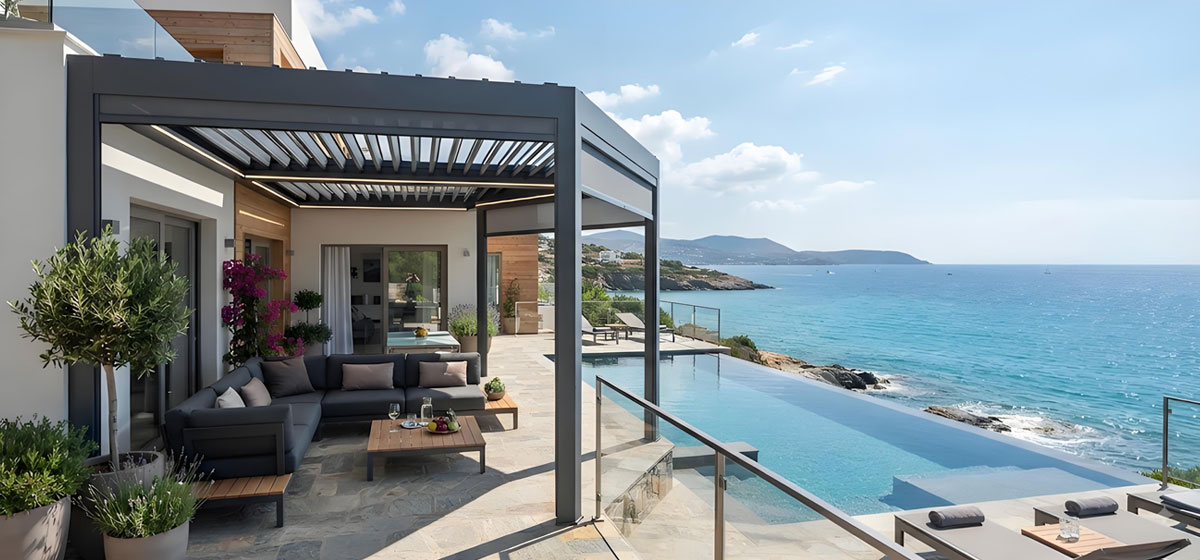
For coastal homes, resorts, restaurants, pool areas, and other outdoor spaces, a pergola serves not only as a shade structure but also as an architectural element that remains exposed to the natural environment for years. Salt-laden air, high humidity, rain, strong sunlight, and changing weather conditions can all place greater demands on the durability of an outdoor structure.
For this reason, choosing a pergola for a coastal environment involves more than looking at its appearance or frame strength. Material selection, surface treatment, hardware, drainage, and long-term maintenance all need to be considered.
What Causes Coastal Corrosion?
Coastal corrosion is not caused by a single factor. It is the result of the long-term interaction between salt, moisture, oxygen, and environmental conditions.
The Impact of Salt and Chloride Ions
Coastal air contains a significant amount of salt, and chloride ions are an important factor in metal corrosion. When salt carried by sea air settles on a pergola surface, the presence of moisture and high humidity can create conditions that promote corrosion.
Compared with structures in inland or typical urban environments, outdoor structures near the coast are generally exposed to more salt spray. Over time, accumulated salt deposits can contribute to surface oxidation and coating deterioration, while also increasing the risk of corrosion around hardware and connection points.
These changes usually do not happen overnight. Instead, they develop gradually through long-term exposure. For a coastal pergola, corrosion resistance is therefore less about simply determining whether a material will “rust” and more about its ability to withstand the environment over time.
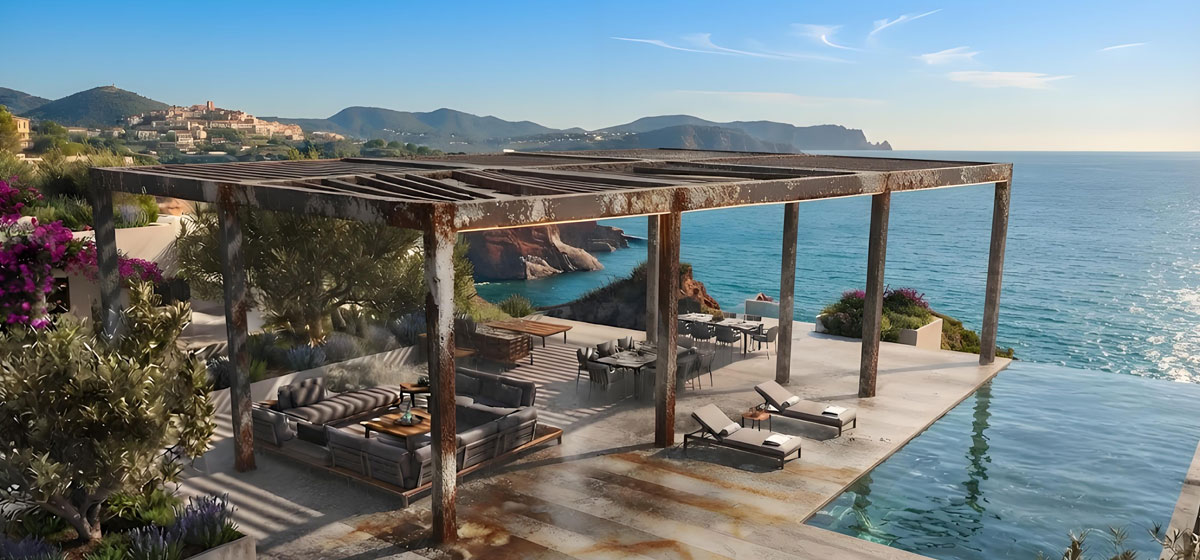
Humidity, Rain, and Condensation
Moisture is another important factor in the corrosion process.
Coastal areas generally experience higher humidity, while rain can carry salt from the air onto the surface of a pergola. If moisture evaporates or drains away quickly, its impact may be limited. However, when water remains around joints, gaps, or drainage areas for extended periods, the risk of corrosion can increase.
Temperature changes between day and night can also cause condensation to form on metal surfaces. In areas that are difficult to keep dry, repeated exposure to moisture can further increase long-term maintenance requirements.
A coastal pergola therefore needs to consider not only the corrosion resistance of its materials but also how effectively it prevents moisture from remaining on or within the structure.
UV Exposure Adds Another Weathering Challenge
Coastal areas often receive strong sunlight, and prolonged exposure to ultraviolet radiation can affect the coating and color stability of a pergola.
This means that coastal pergolas face more than just corrosion. They must also withstand the combined effects of sunlight, rain, humidity, and temperature changes over time.
A pergola designed for a coastal environment therefore needs to address both corrosion resistance and overall weather resistance.
Why Is Aluminum Commonly Used for Coastal Pergolas?
Aluminum vs. Traditional Steel
Aluminum is a widely used structural material for modern outdoor pergolas. Compared with traditional steel, aluminum is lightweight and offers good natural corrosion resistance. Unlike ordinary carbon steel, it does not develop the characteristic red rust associated with steel corrosion, making it well suited to long-term outdoor applications.
For residential, hospitality, and commercial outdoor spaces, aluminum's relatively low maintenance requirements are another important advantage. At the same time, aluminum is highly workable, allowing manufacturers to create a variety of structural designs, architectural forms, and louvered roof systems.
Aluminum Does Not Mean Completely Corrosion-Proof
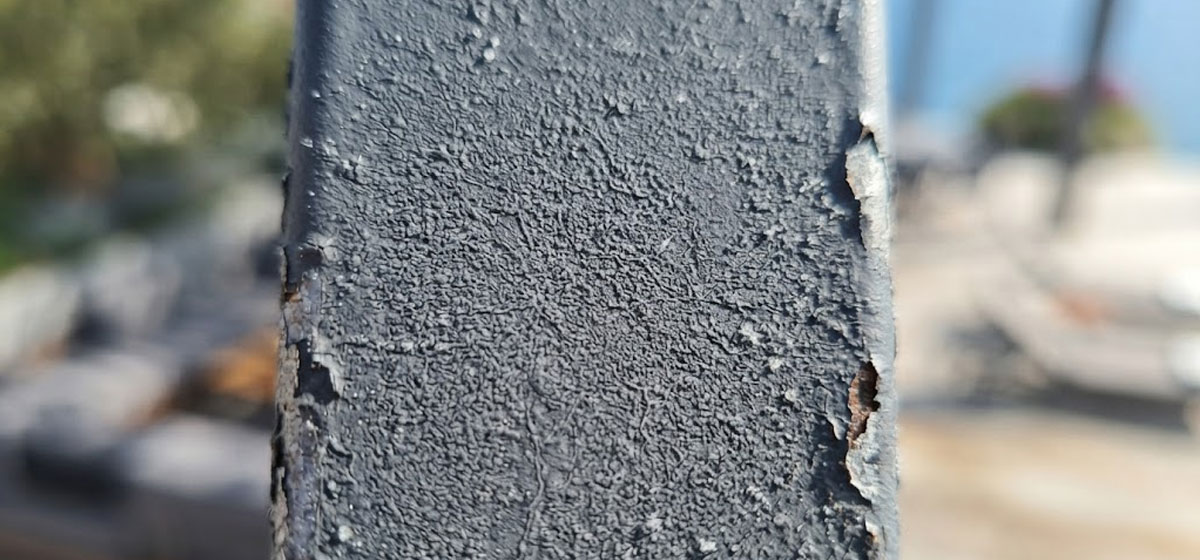
It is important to understand that using aluminum does not mean a pergola is completely immune to corrosion.
Aluminum naturally forms an oxide layer on its surface that provides a degree of protection to the underlying material. However, in high-salt, high-humidity coastal environments, aluminum can still be affected by long-term exposure.
Therefore, an “aluminum pergola” is not automatically a “coastal-ready pergola.”
What determines whether a pergola can perform well in a coastal environment is the overall design, from the material itself to the smallest structural details.
What Makes an Aluminum Pergola Better Suited to Coastal Environments?
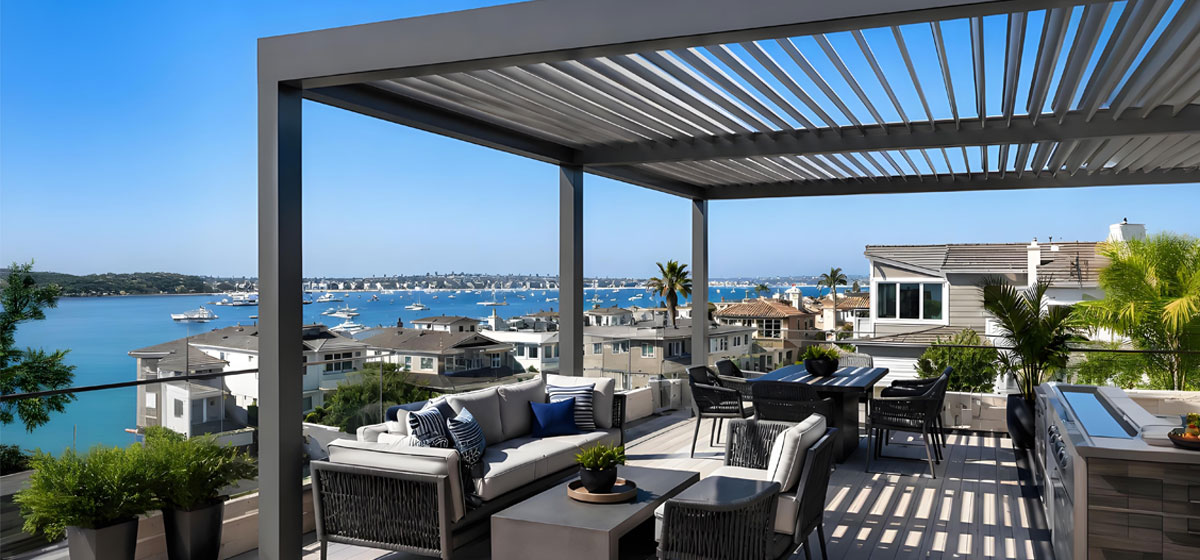
Several factors should be considered when evaluating an aluminum pergola for coastal use.
The first is the material itself, including aluminum quality and structural design. Surface treatment is another important factor because it helps protect the metal from salt, moisture, and UV exposure.
Hardware such as screws, hinges, brackets, and other connection components also deserves attention because these smaller components remain exposed to outdoor conditions as well.
Drainage is another factor that is easy to overlook. A well-designed drainage system can reduce the amount of time moisture remains within or around the structure.
Finally, installation matters. Local wind conditions, ground conditions, and the surrounding building environment can all affect the performance of a pergola. Proper installation is therefore just as important as material and design.
AMS Pergola takes an integrated approach to aluminum pergola design, combining the frame, surface treatment, connection details, and outdoor performance requirements rather than relying on a single material to address durability.
Why Does Surface Treatment Matter for Coastal Durability?
For an aluminum pergola, the material itself is only the foundation. Surface treatment provides another important layer of protection for the structure.
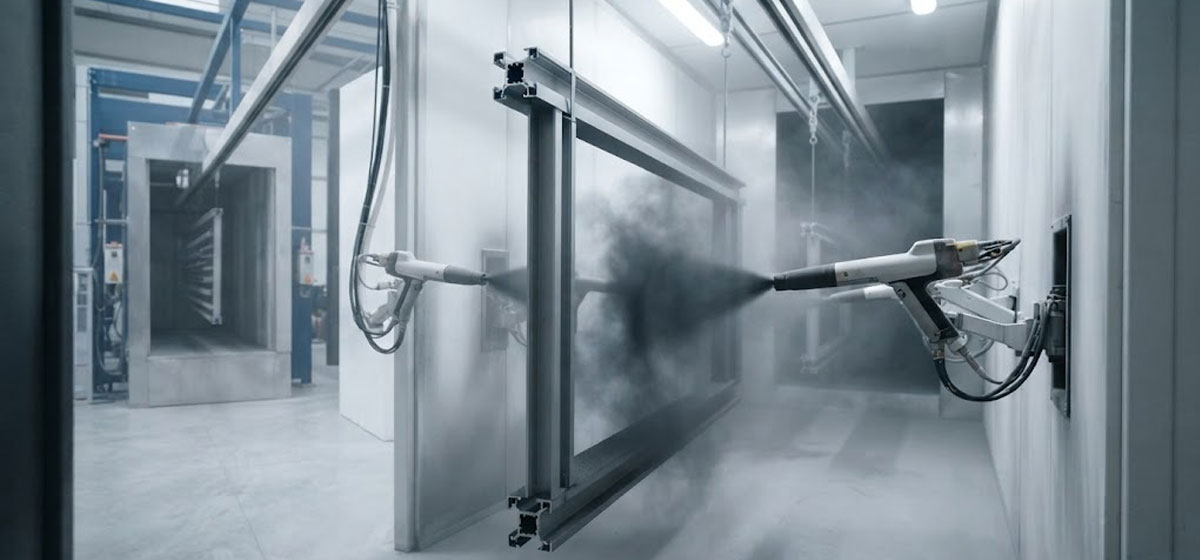
The Role of Powder Coating
Powder coating creates a protective layer over the aluminum surface, helping reduce direct exposure to moisture, salt, and other contaminants.
For pergolas exposed to coastal conditions over long periods, a properly selected and applied coating can help improve weather resistance while maintaining the color and overall appearance of the structure.
Under the combined effects of salt spray, UV exposure, rain, and humidity, the surface coating plays an important role in protecting the underlying material.
Look Beyond “Powder Coated”
When purchasing a pergola, simply seeing that it is “powder-coated” is not enough to determine its long-term performance.
Different products can vary in coating materials, application processes, and quality control. For coastal environments, it is more useful to look at specific coating standards and performance characteristics, such as coating adhesion, thickness, UV resistance, and overall outdoor durability.
When a manufacturer can provide clear technical specifications or relevant testing documentation, customers can make a more informed assessment of whether the product is suitable for long-term outdoor use.
For AMS Pergola, if a specific product uses defined powder coating standards or relevant testing classifications, providing those technical details offers more meaningful information than simply describing the coating as “high quality.”
Don't Overlook the Smaller Components
Fasteners Can Become a Weak Point
Pergola durability is not only about the main frame.
Screws, bolts, brackets, hinges, and other connection components may be small, but they can become potential weak points in a long-term outdoor environment.
If these components corrode, they can affect not only the appearance of the structure but also the long-term performance of the connections.
This is particularly important in coastal environments, where salt and moisture can accumulate around joints and connection points.
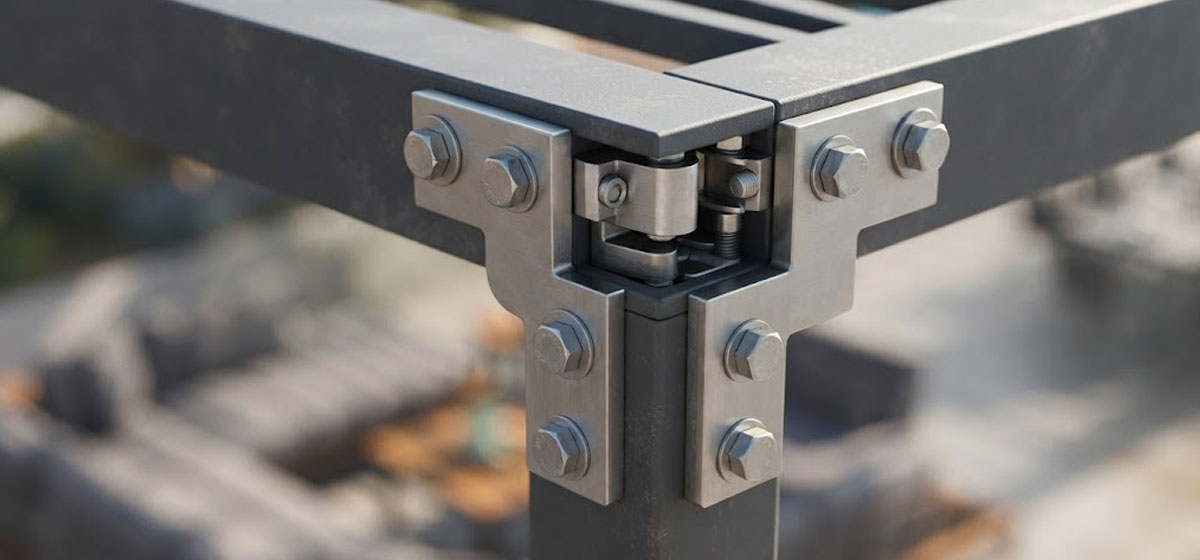
Why Hardware Selection Matters
It is also important to consider contact between different metals. When dissimilar metals come into contact in a wet, salt-rich environment, galvanic corrosion can occur. The presence of salt and moisture can make this electrochemical process more significant.
A pergola designed for coastal use therefore needs to consider more than the visible aluminum frame. The choice of connection methods and the materials used for smaller and internal components also matter.
For a complete system such as AMS Pergola, the compatibility of the frame, hardware, and connection details is part of the overall approach to outdoor durability.
Good Pergola Design Should Help Manage Rainwater
Coastal corrosion is not only related to salt. It is also influenced by how water enters, remains within, and drains from the structure.
When rainwater remains around frame connections or other areas that are difficult to dry, the structure may stay exposed to moisture for longer periods.
A well-designed pergola therefore needs to do more than provide shelter from rain. It should also provide a clear and effective way to direct rainwater away from the structure.
Reduce Standing Water and Moisture Retention
Effective drainage design can reduce the amount of time water remains within the structure and help minimize the long-term accumulation of salt carried by moisture.
Frame connections, gutters, and other areas that are prone to water accumulation require particular attention.
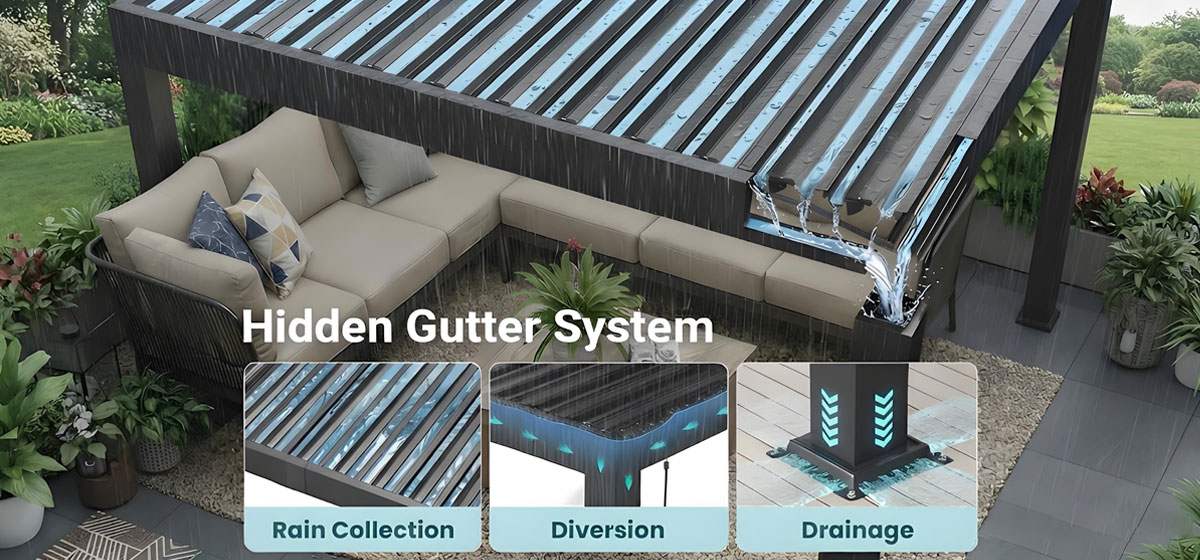
Integrated Drainage Design
Pergolas can incorporate gutters, drainage channels, internal drainage paths, and appropriate slopes to direct rainwater toward designated outlets.
This approach not only helps keep the structure drier but can also reduce prolonged exposure of critical connection points to water.
Integrated drainage is also an important part of the design approach used in AMS Pergola systems. By incorporating drainage into the overall structure, rainwater can be directed away from the pergola while maintaining a clean and streamlined appearance.
Coastal Pergolas Face More Than Corrosion
Focusing only on corrosion is not enough when evaluating a pergola for a coastal environment.
Salt, humidity, and UV exposure are only part of the challenge. Coastal areas can also experience stronger winds, more frequent weather changes, and significant temperature fluctuations.
All of these factors can affect the pergola frame, connection points, louver system, and anchoring structure.
A coastal pergola therefore needs to address both material durability and overall structural performance.
For pergolas with louvered roofs, the louvers, moving components, and operating system need to work together with the main structural frame. At the same time, frame strength, connection methods, and ground anchoring should be designed with local wind conditions in mind.
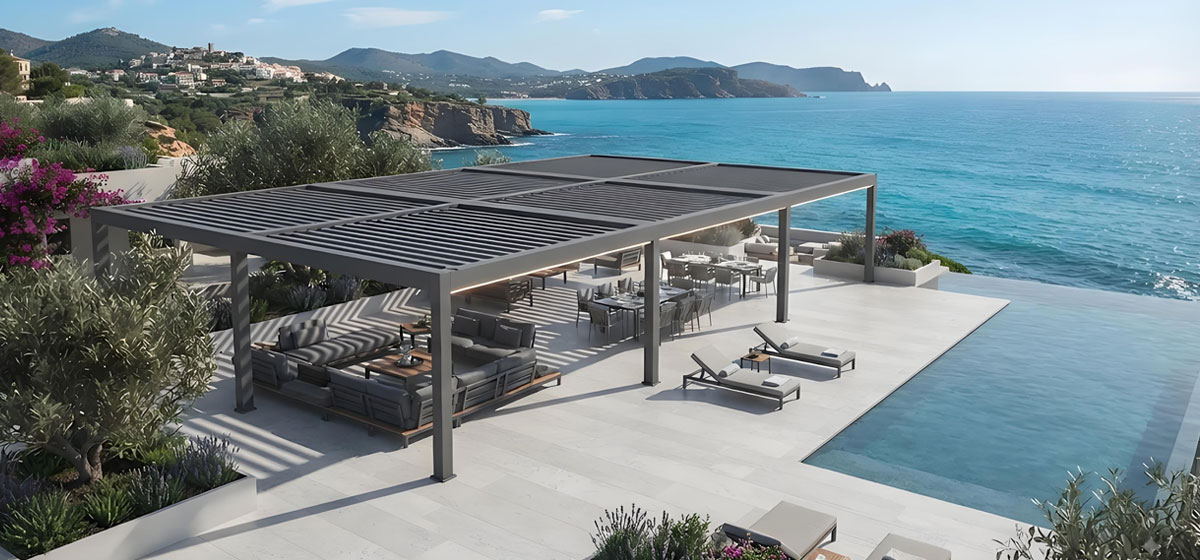
AMS Pergola uses louvered roof systems and structural aluminum frames that can be configured to meet the relevant environmental load requirements for different products and projects. Certain product configurations can support wind loads of approximately 180–220 km/h and snow loads of approximately 160–180 kg/m².
Actual load capacity, however, depends on factors such as the specific model, dimensions, structural configuration, installation method, and local environmental conditions. For individual projects, the applicable product specifications and engineering requirements should always be used as the reference.
How Should a Pergola Be Maintained in a Coastal Environment?
Even when a pergola uses corrosion-resistant materials and a well-designed structure, regular maintenance remains important in coastal environments. Good materials and surface treatments can reduce maintenance requirements, but they cannot eliminate the need for maintenance altogether.
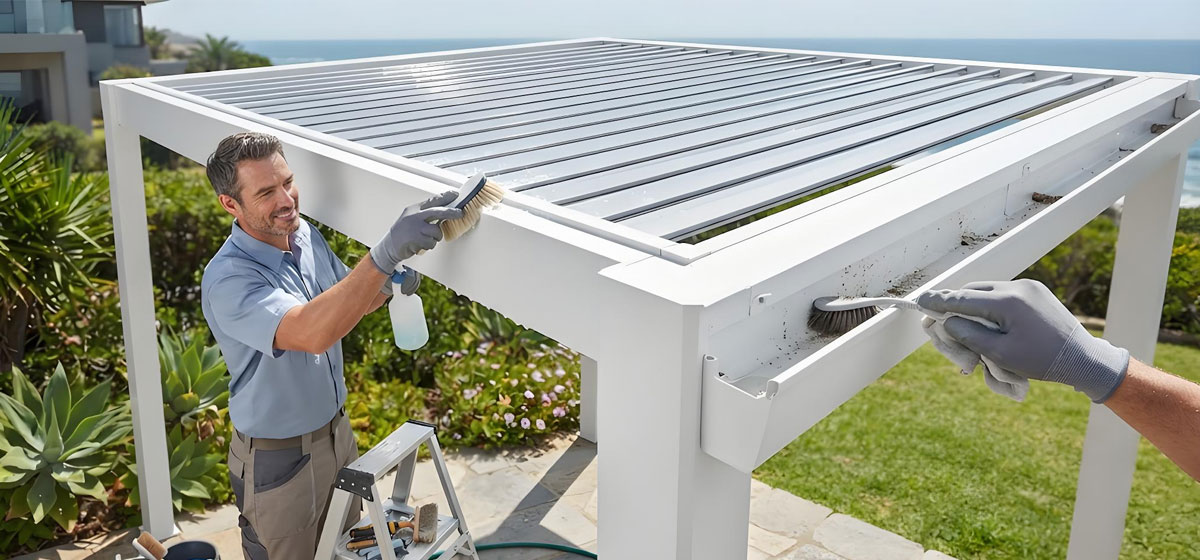
For coastal areas, routine maintenance should focus on the following:
· Rinse the surface regularly
Use clean water to rinse the frame and louvers and remove accumulated salt. This is particularly important for locations close to the coast or exposed to heavy salt spray.
· Keep the louvers and frame clean
Remove dust, salt, and other contaminants regularly to prevent long-term buildup from affecting the appearance and surface condition.
· Check the drainage system
Clean gutters and drainage outlets regularly to prevent leaves, dust, and other debris from blocking drainage channels and causing standing water.
· Inspect hardware and connection points
Check screws, hinges, brackets, and other connection components for signs of corrosion, looseness, or abnormal operation.
· Use appropriate cleaning methods
Avoid highly corrosive cleaning products that could damage the powder-coated surface, and follow the manufacturer's recommended maintenance procedures.
For coastal pergolas, simple and consistent maintenance is generally more effective than waiting until visible problems develop and then carrying out major repairs.
How to Choose a Pergola for a Coastal Environment
When it comes to purchasing a pergola, appearance and price are certainly important. However, for coastal projects, it is even more important to understand the materials, design, and manufacturing standards behind the product.
Consider the following factors:
· Frame material
Understand the type and quality of aluminum used, as well as the overall structural design, rather than simply asking whether the pergola is made of aluminum.
· Surface treatment
Check whether the pergola uses powder coating and ask about coating specifications, UV resistance, and outdoor weather resistance. Relevant testing documentation can also provide useful information.
· Hardware and connection components
Pay attention to the corrosion resistance of screws, hinges, brackets, and other connection components. A durable main frame does not necessarily mean every smaller component offers the same level of durability.
· Drainage design
Find out whether the system incorporates integrated gutters, drainage channels, or other rainwater management features designed to prevent water from remaining within the structure or around connection points.
· Structural and wind resistance
Coastal areas often experience stronger winds. Consider the pergola's structural design, wind resistance, and the stability of its louver system in relation to local environmental conditions.
· Installation method
Proper anchoring and professional installation are equally important. The actual structural performance of a pergola depends not only on the product itself but also on the foundation, anchoring method, and site conditions.
· Long-term maintenance and service
Understand routine maintenance requirements, replacement parts, and ongoing service support to ensure the pergola remains practical and reliable over the long term.
These factors are equally relevant when evaluating outdoor pergola systems such as AMS Pergola. Rather than focusing only on how a pergola looks, it is worth looking more closely at how the system is designed to withstand long-term outdoor exposure.
Conclusion: Choose a Pergola Designed for Its Environment
A well-designed pergola can provide comfortable shade and enhance the outdoor experience of coastal homes, resorts, restaurants, and other outdoor spaces. However, its long-term performance often depends on details that may not be immediately visible.
From materials and surface treatment to hardware, drainage, structural design, installation, and ongoing maintenance, every element can influence how a pergola performs in a coastal environment.
Rather than simply looking for a product that is “corrosion-resistant,” it is better to evaluate the pergola as a complete system. When materials, design, installation, and maintenance work together, a pergola is better equipped to handle long-term exposure to salt spray, humidity, UV radiation, rain, and wind.
AMS Pergola takes an integrated approach to outdoor design, combining aluminum structures, louvered roof systems, drainage, and structural considerations to provide pergola solutions for residential and commercial outdoor spaces that balance shade, architectural appeal, and long-term outdoor performance.
If you are planning a pergola for a coastal home, resort, restaurant, or other outdoor space, explore AMS Pergola's solutions or contact our team to discuss a pergola solution based on your project's environment, space requirements, and intended use.
