

If you've requested quotations from different suppliers, you've probably noticed that aluminum louver prices can vary significantly—even for products that appear similar at first glance. One manufacturer may quote a basic fixed louver at a surprisingly low price, while another charges considerably more for what seems to be the same specification.
The truth is that aluminum louver pricing is influenced by far more than the visible product. Material grade, blade profile, aluminum thickness, surface finish, customization requirements, production volume, and shipping method all contribute to the final cost. Focusing only on the lowest price can lead to unexpected expenses later, such as shorter service life, higher maintenance costs, or installation challenges.
In this guide, we'll explain what aluminum louvers typically cost, what factors have the greatest impact on pricing, and how to evaluate quotations so you can choose the right solution for your project without paying more than necessary.
What Is the Average Cost of Aluminum Louvers?
There is no universal price for aluminum louvers because each project is quoted based on its specific requirements. However, having a general price reference can help you understand the expected investment range before starting a project.
For standard architectural aluminum louvers, the price typically ranges from $30 to $150 per square meter for fixed systems. More advanced solutions, such as adjustable louvers, motorized systems, or highly customized designs, may range from $150 to $400+ per square meter.
These figures are only general market references. The final quotation may differ depending on the project scope, supplier capabilities, and regional market conditions. In addition to the louver itself, buyers should also consider other project-related expenses when preparing their overall budget.
What Factors Affect Aluminum Louver Cost?
The cost of aluminum louvers can be considered as a combination of multiple stages. From product design to material selection, manufacturing processes, and final delivery, each stage contributes to the overall project cost.
In the following sections, we will break down these cost components to help you better understand what is behind an aluminum louver quotation.
Louver Type
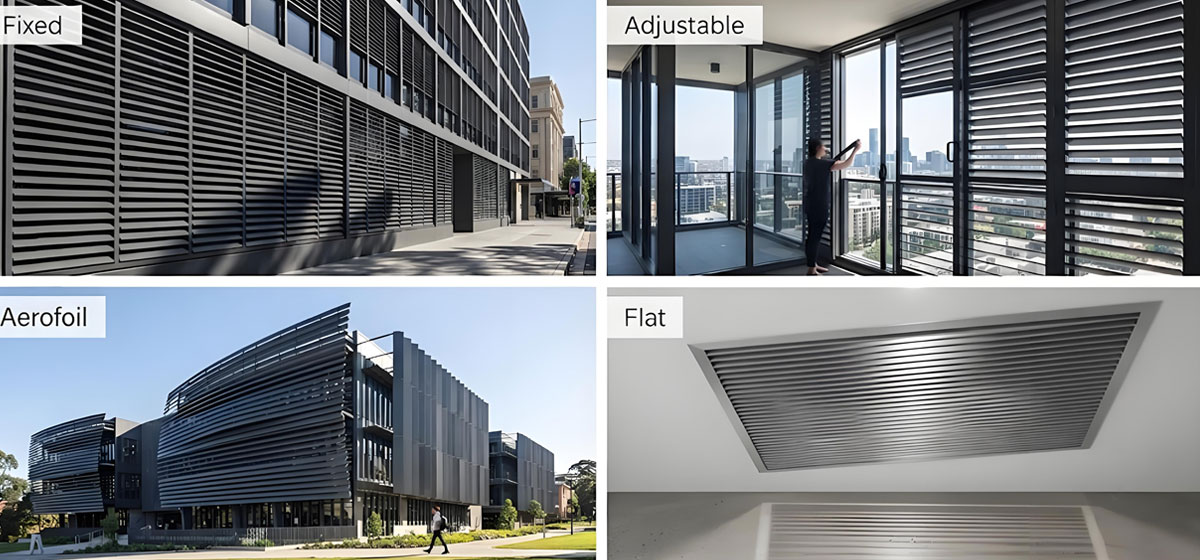
Different types of louver systems involve different levels of structural design and manufacturing complexity. Standard fixed louvers usually have a simpler structure, while adjustable louvers, motorized louvers, aerofoil louvers, and decorative louvers often require additional components and more precise fabrication processes, resulting in higher overall costs.
Blade Size
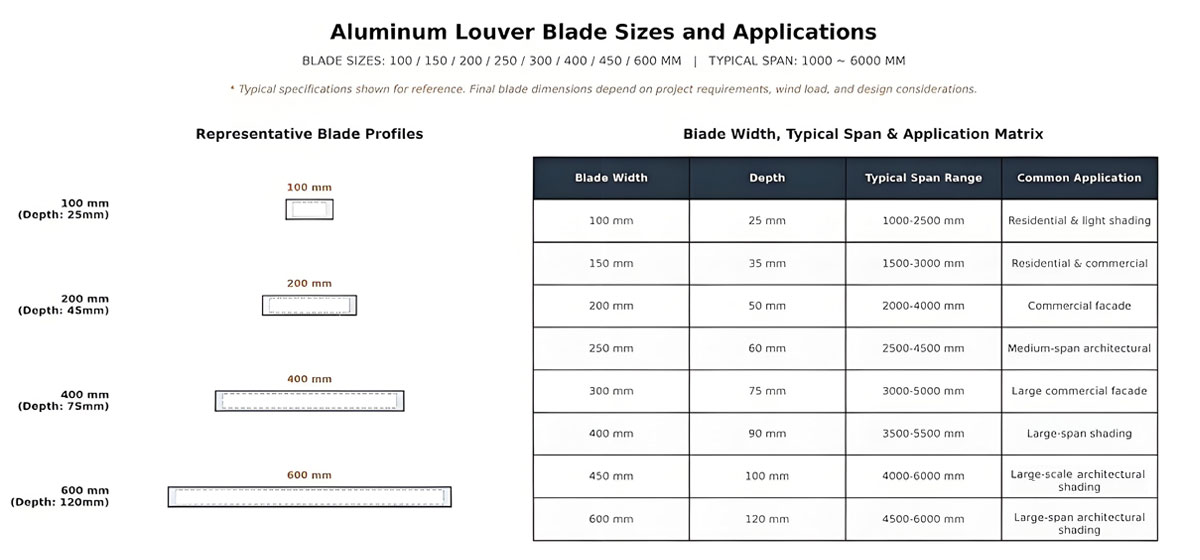
Blade size affects not only the appearance of the louver system but also its structural requirements. Larger blades or longer spans typically require more aluminum material, stronger profiles, and additional support solutions to ensure stability during operation.
Aluminum Alloy
The aluminum alloy used in production affects both the performance and material cost of the louver system. Common options such as 6063 and 6061 aluminum have differences in strength, extrusion performance, and durability. The suitable alloy should be selected based on the project environment and performance requirements.
Thickness
Profile thickness is one of the key factors that distinguishes standard solutions from higher-specification systems. Thinner profiles may help reduce initial costs, while thicker profiles provide better structural strength and long-term durability, especially in high-wind areas or commercial buildings.
Surface Finish
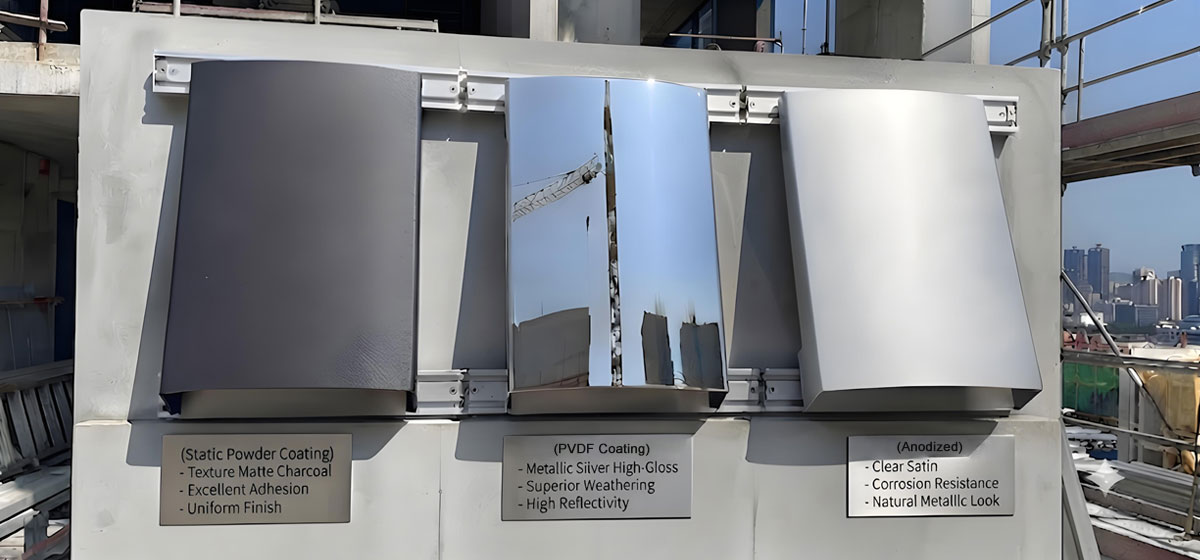
For outdoor aluminum louvers, surface finish affects more than just appearance. Different treatments, including powder coating, PVDF coating, and anodizing, provide different levels of weather resistance, UV protection, and service life, which can influence the overall cost.
Color
Color selection is often overlooked during budget planning, but it can affect the final quotation for customized projects. Standard colors are generally more cost-effective, while special RAL colors or small-volume color requirements may require additional coating preparation and production adjustments.
Custom Design
Many buyers assume customization only means changing dimensions, but custom aluminum louvers often involve much more. Special blade shapes, unique mounting systems, project-specific drawings, and engineering support may require additional design and manufacturing work.
Working with an experienced aluminum louver manufacturer like AMS can help you optimize the customization process, avoid unnecessary design changes, and achieve a better balance between performance requirements and project budget.
Quantity
Order quantity affects production efficiency and cost control. Larger order volumes can help distribute preparation costs and improve manufacturing efficiency, while smaller orders may result in higher unit costs due to additional setup and processing requirements.
Shipping
For international projects, the final cost is not determined only by the factory price. Product volume, packaging efficiency, shipping distance, and container utilization can all affect the final delivered cost, especially for large-scale aluminum louver systems.
choosing a manufacturer with export experience can help improve packaging efficiency and reduce transportation risks.
Price Comparison by Louver Type
When you compare different aluminum louver options, you will find that each type comes with a different price range based on its structure and performance. The table below gives you a quick overview of the typical cost level and suitable applications of common aluminum louver systems.
Type | Typical Price Range | Applicable Scenarios |
Fixed Aluminum Louver | $30–$150 /㎡ | If you need a cost-effective solution for facade shading, ventilation, and general architectural applications |
Adjustable Aluminum Louver | $150–$300 /㎡ | If you need flexible control of sunlight, airflow, and shading performance |
Aerofoil Aluminum Louver | $150–$400+ /㎡ | If you are looking for high-performance shading solutions and modern architectural facade designs |
Flat Aluminum Louver | $50–$200 /㎡ | If you prefer a clean, linear appearance for contemporary facade designs |
Prices are general references only. Your final quotation may vary depending on specifications, material selection, surface finish, customization requirements, order quantity, and shipping conditions.
If you are looking for a customized aluminum louver solution, working with an experienced manufacturer can help you better control product specifications, design options, and overall project costs. AMS supports different project requirements by providing tailored louver solutions for architects, contractors, and distributors.
Hidden Costs You Should Consider When Buying Aluminum Louvers
When planning an aluminum louver project, the product price is only part of the total investment. Installation requirements, engineering support, and long-term maintenance can also influence your overall project cost.
Installation Requirements
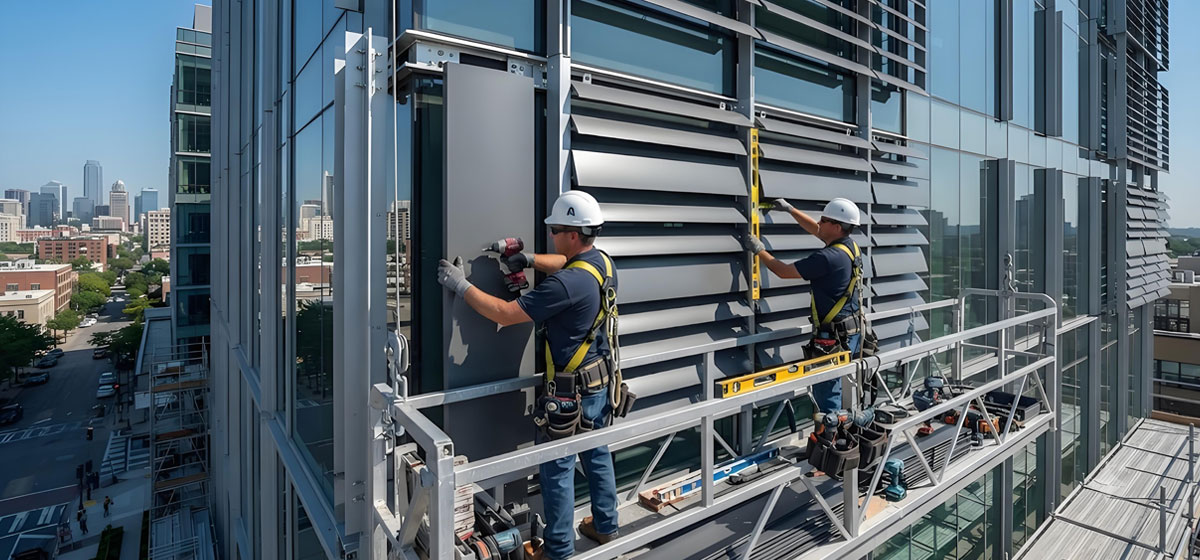
The installation method can affect the final project cost. Special mounting systems, additional support structures, or complex site conditions may require extra labor and accessories.
Engineering Support
Some projects require more than standard louver products. Custom drawings, technical adjustments, and project-specific requirements may involve additional design and engineering costs.
Long-Term Maintenance
The lowest initial price does not always mean the best value. Material quality, surface finish, and product durability can affect future maintenance requirements and replacement costs.
How to Reduce Aluminum Louver Costs Without Sacrificing Quality
Reducing aluminum louver costs does not always mean choosing the cheapest option. A better approach is to optimize your design, specifications, and supplier selection to achieve the right balance between performance and budget.
Here are several practical ways to control costs without compromising quality.
Choose the Right Louver Type
Selecting a louver system based on your actual needs can help avoid unnecessary costs. For example, fixed louvers may be a more economical choice when adjustable control is not required.
Optimize Product Specifications
Choosing suitable aluminum grades, profile thicknesses, and surface finishes based on your project requirements can help reduce costs while maintaining the required performance.
Define Requirements Early
Clear project requirements and drawings at the beginning can reduce design changes, improve production efficiency, and avoid additional costs during manufacturing.
Work with an Experienced Manufacturer
An experienced manufacturer can help you find a practical solution that matches your budget and performance requirements. AMS works with different project partners to provide customized aluminum louver solutions based on specific application needs.
Conclusion
When evaluating aluminum louver costs, the most important question is not simply “How much does it cost?” but “Does this solution create value for your project?”
A well-designed aluminum louver system should meet your functional requirements while avoiding unnecessary specifications that increase costs. The best choice is not always the lowest-priced option or the highest-end configuration, but the one that matches your architectural design, performance requirements, and long-term investment goals.
Whether you are working on a commercial facade, sun shading system, or customized architectural application, getting professional advice during the planning stage can help you avoid unnecessary expenses and achieve better results. If you are planning an aluminum louver project, contact AMS to discuss your requirements and explore a solution that fits your application.
