

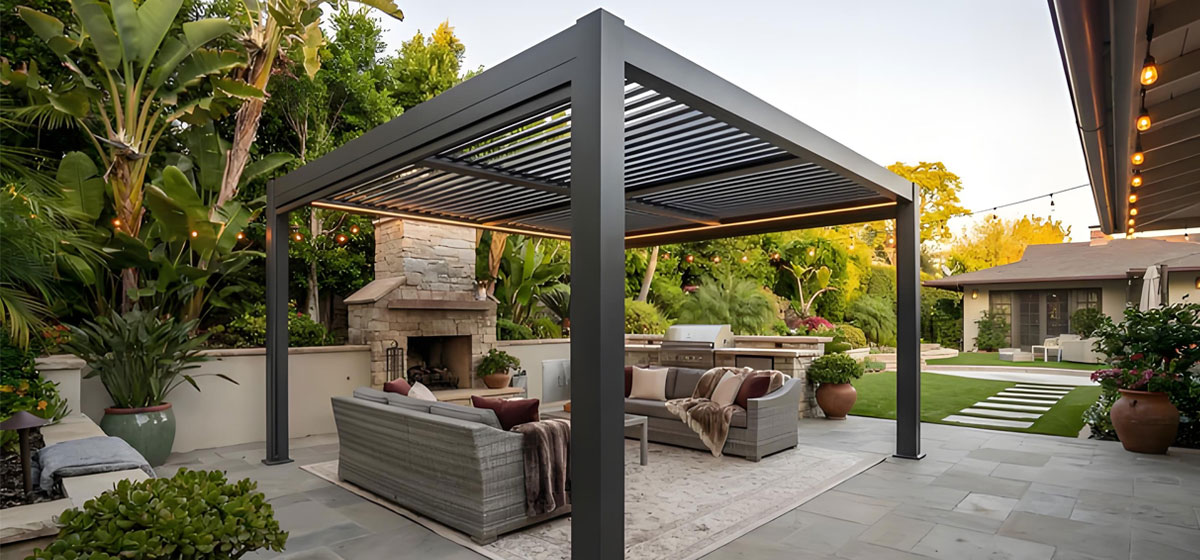
When shopping for a pergola, many buyers are surprised to find that two products with a similar appearance can have completely different prices. One supplier may offer an aluminum louvered pergola for $3,000, while another may quote $6,000 or more for what seems to be the same size and design. So, why is there such a big price difference?
The answer is that a pergola’s price is not determined only by its size or appearance. The quality of aluminum, structural design, manufacturing standards, components, customization options, and long-term support all play an important role. Understanding these differences can help you look beyond the initial price and choose a pergola that offers better value and reliability over time.
1. Aluminum Quality and Structural Design
One of the biggest factors affecting pergola prices is the quality of the aluminum used and the structural design of the system. Although many aluminum pergolas may look similar from the outside, the materials and engineering inside can be completely different.
The aluminum grade plays an important role in strength, durability, and corrosion resistance. High-quality pergolas typically use architectural-grade aluminum such as 6063-T5 or 6061 aluminum, which provides excellent strength and stability. In contrast, some lower-cost pergolas may use lower-grade or recycled aluminum, which can affect the overall performance and lifespan of the structure.
The thickness of the aluminum profiles is another important factor. Budget pergolas often use thinner profiles to reduce material costs, while premium systems usually use thicker aluminum sections to improve structural strength and wind resistance. A pergola with a 1.2mm profile and one with a 2.5mm or 3.0mm profile may look similar after installation, but their durability and ability to withstand harsh weather conditions can be very different.
In addition to the aluminum itself, the internal profile design also affects the price. Well-designed aluminum extrusions are engineered to provide better load-bearing capacity and stability while maintaining an attractive appearance.
This is why two pergolas with the same size and similar appearance can have very different prices. The difference is often hidden inside the structure.
2. Louver Design and Waterproof Performance
The louver system is another key factor that influences the price of a pergola. As the most important functional part of a louvered pergola, the roof system directly affects waterproof performance, durability, comfort, and overall user experience.
At first glance, different louver systems may look similar, but their internal designs can vary significantly. Some lower-cost pergolas use simple aluminum panels with basic structures, while premium systems are designed with reinforced louver profiles, double-layer hollow structures, and more advanced connection systems.
A high-quality louver design does more than provide shade. It also needs to effectively manage rainwater through well-designed drainage channels and sealing systems. When the louvers are closed, a properly engineered system can minimize water leakage and provide better protection during changing weather conditions.
The design of the louver system also affects noise levels and wind resistance. Stronger profiles and better structural connections help reduce movement during windy conditions and improve the overall stability of the pergola.
Developing a reliable louver roof system requires more engineering, testing, and higher-quality components, which naturally increases production costs. This is one of the reasons why two pergolas with similar appearances can have very different prices.
3. Motor Quality and Smart Control System
For motorized louvered pergolas, the motor system is one of the most important components affecting both performance and price. Since the motor controls the opening and closing of the louvers, its quality directly impacts the user experience, reliability, and lifespan of the pergola.
Not all motors are the same. Lower-priced pergolas may use basic motors that can reduce the initial cost, while premium pergola systems often use higher-quality motors from reliable manufacturers, such as Somfy or Dooya, which are known for their stability and durability.
A high-quality motor provides smoother operation, lower noise levels, and better performance under different weather conditions. It is also designed to handle the weight and movement of the louver system more efficiently.
In addition to the motor itself, smart control features can also affect the overall price. Options such as remote controls, smartphone apps, weather sensors, and smart home integration provide greater convenience and automation.
Although these features increase the initial investment, they improve daily usability and create a more comfortable outdoor living experience. Therefore, the motor system and smart features are important reasons why pergola prices can vary significantly.
4. Powder Coating and Surface Protection
When customers compare pergolas, the color is often one of the first things they notice. However, what looks the same on the first day may not remain the same after years of exposure to sunlight, rain, and humidity.
The difference usually comes from the powder coating system behind the finish. A basic coating may provide an attractive appearance initially, but long-term exposure to UV rays and outdoor conditions can gradually cause fading, chalking, or loss of surface protection.
Premium pergolas typically use higher-grade architectural powder coatings that are designed to maintain color stability and provide stronger resistance against corrosion. The preparation process before coating is also critical, including surface cleaning, treatment, and quality control during application.
This difference becomes even more noticeable in challenging environments. For example, pergolas installed near the coast face constant exposure to salt air, while those in areas with strong sunlight experience greater UV impact.
A high-quality finish may not be the most obvious difference when a pergola is newly installed, but it plays an important role in how the product looks and performs years later.
5. Hardware Quality and Engineering Standards
A pergola is not only defined by its aluminum frame and louver system. Behind these visible structures, many smaller components work together to keep the entire system stable and reliable.
Screws, brackets, hinges, seals, and connection parts may seem like minor details, but they play an important role in the overall performance of a pergola. Although these components usually represent only a small portion of the total cost, the choice of materials can have a significant impact on durability and maintenance requirements.
For example, standard metal hardware may be suitable for general environments, but 304 or 316 stainless steel components provide stronger corrosion resistance and are better suited for coastal areas or locations with high humidity.
The internal components of the louver system are equally important. High-quality seals help improve weather protection, while durable hinges and connection parts allow the louvers to operate smoothly through repeated opening and closing cycles.
Beyond component quality, professional manufacturers also pay attention to engineering standards and product testing. Instead of only producing a structure that looks complete, experienced manufacturers verify performance through testing such as wind load tests, snow load tests, and waterproof tests.
These processes help ensure that the pergola is designed to handle real outdoor conditions. A reliable pergola is not simply a collection of individual parts—it is a complete system where every component, from the smallest hardware piece to the overall structure, works together to deliver long-term performance.
6. Customization and Additional Features
Not every pergola project starts with a standard size and a simple installation area. Many homeowners have specific requirements based on their outdoor space, architectural style, and lifestyle needs. This is where customization becomes one of the factors that creates price differences.
A standard pergola can be produced in batches with fixed dimensions and configurations, which allows manufacturers to optimize material usage and production efficiency. Custom projects, however, often require additional planning before production begins.
For example, a pergola designed for an irregular outdoor area may require different dimensions, unique layouts, or adjustments to match an existing building structure. These changes involve additional design work, technical communication, and project coordination.
Accessories can also change the overall cost depending on the level of comfort and functionality a homeowner wants to achieve. Options such as LED lighting, zip screens, heaters, glass panels, weather sensors, and custom colors can transform a basic pergola into a complete outdoor living space.
The price difference between a standard and customized pergola is not simply about adding more materials. It also reflects the additional design, preparation, and coordination required to create a solution that fits a specific space.
7. Warranty and Long-Term Support
A pergola is a long-term outdoor investment, and the relationship between the buyer and the manufacturer does not end when the installation is complete. Over the years, access to technical support, replacement parts, and reliable service can become just as important as the product itself.
Behind a reliable warranty is a complete support system. Manufacturers that provide long-term service need to maintain spare parts, keep product records, train technical teams, and ensure that customers can receive assistance when problems occur.
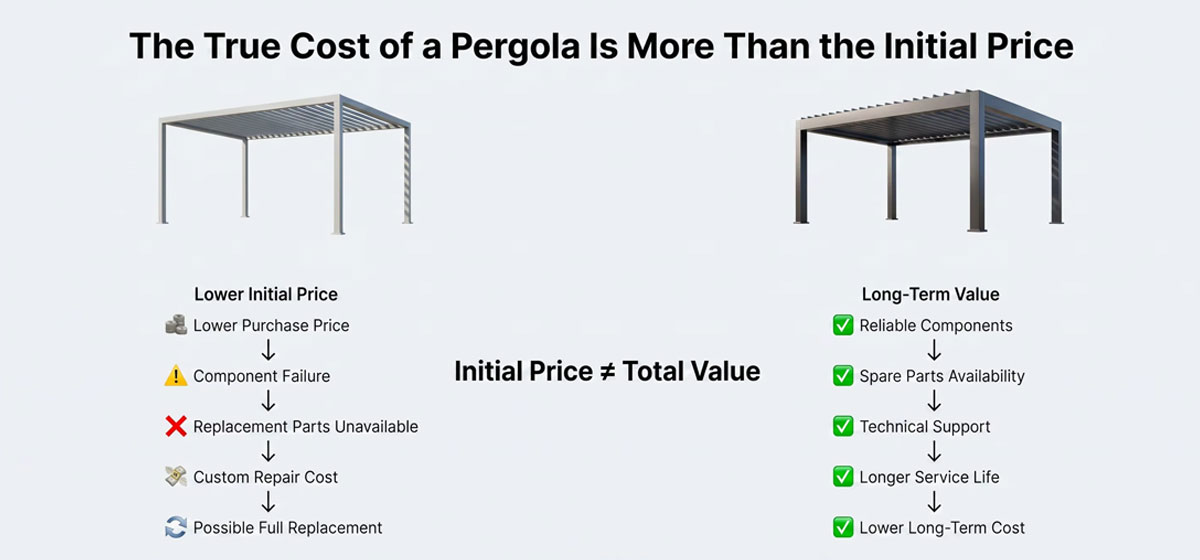
This is also one reason why two pergolas with similar specifications may have different prices. A lower-priced product may focus mainly on the initial sale, while a manufacturer with long-term support needs to consider the costs of maintaining service after the purchase.
Replacement parts are an important example. Outdoor products are exposed to weather conditions for many years, and components such as motors, louvers, or drainage parts may eventually need replacement. If a product line has been discontinued or spare parts are no longer available, even a small repair can become a difficult problem.
Some homeowners may have to search for local fabricators to reproduce specific components, which can be expensive and may not perfectly match the original system. In some cases, replacing the entire pergola becomes the only practical solution.
For this reason, warranty and after-sales support should be considered part of the overall value of a pergola, not simply an additional service.
8. Factory vs. Trading Company
The company behind a pergola also plays a role in determining its final price. In the outdoor living industry, customers may receive quotes from manufacturers, distributors, or trading companies, and each business model has a different cost structure.
A manufacturer that produces pergolas directly usually has more control over the entire process, from material selection and production planning to quality inspection and product improvements. This direct involvement allows manufacturers to better manage consistency and maintain a stable supply of replacement parts.
Trading companies, on the other hand, often work with different suppliers and help customers source products from various manufacturers. This can provide convenience and access to different options, but the level of control over production, product updates, and long-term support may depend on the factory they work with.
The supply chain behind a pergola can influence more than just the initial quotation. It may also affect communication efficiency, customization flexibility, product consistency, and after-sales support.
For buyers, understanding who is actually producing the pergola can provide valuable insight into what is included in the price and what kind of support they can expect in the future.
Conclusion
A pergola is not a product where the lowest price always represents the best value. Unlike many indoor products, an outdoor structure is exposed to sunlight, rain, wind, and changing weather conditions for years. The decisions made before purchase can directly affect the experience long after installation.
When comparing different pergola suppliers, the most important question is not only “How much does it cost?” but also “What value is included in that price?” A reliable pergola should provide confidence in its materials, performance, availability of support, and the ability to continue serving your outdoor space in the future.
This is also why choosing a manufacturer with real production experience matters. A company that understands the complete process—from product development and manufacturing to customer support—is better positioned to provide consistent quality and long-term solutions.
With more than 15 years of experience in outdoor shading products, AMS Pergolas focuses on delivering aluminum louvered pergola systems designed for durability, functionality, and long-term use. With its own manufacturing capabilities, professional production process, and experience serving customers in different markets, AMS provides solutions that balance quality, customization, and value.
Purchasing a pergola should not be viewed as a short-term expense, but as a long-term investment. The goal is not to find the cheapest option available, but to choose a solution that offers the right balance of quality, performance, and long-term value.
