

When creating a comfortable outdoor space at home, a veranda and a pergola are two popular options. While they may seem similar at first, both designed to offer shade or shelter for outdoor activities, they actually differ quite a bit in terms of design and functionality. A veranda typically provides more comprehensive protection, while a pergola focuses more on an open design and aesthetic appeal. Understanding their differences will help you choose the one that best suits your needs.
What is a Veranda?
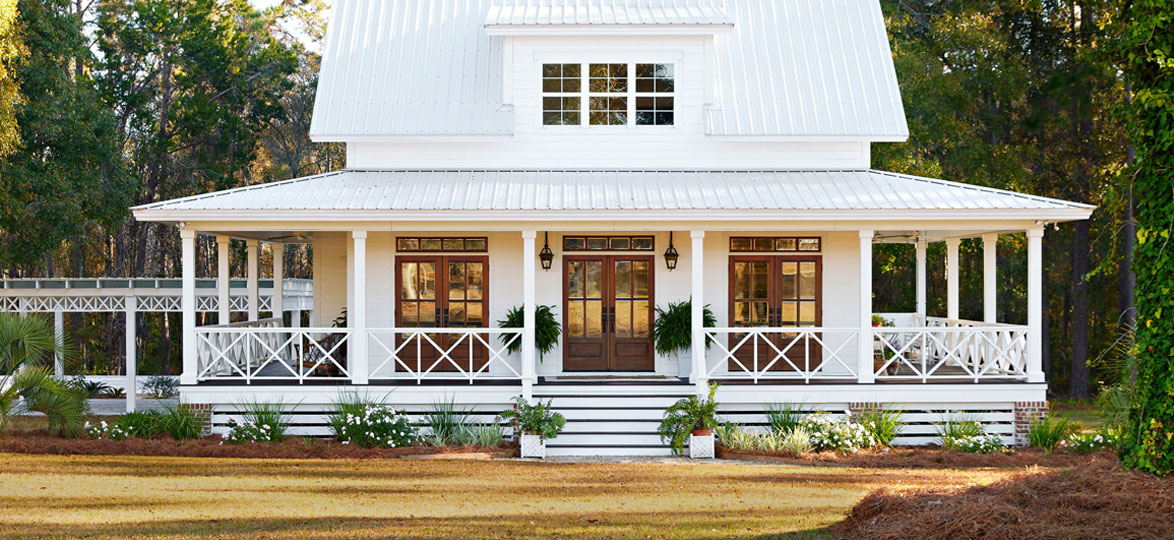
A veranda (or verandah) is a covered outdoor corridor attached to the outside of a house, and it is a permanent structure. The roof can be flat, curved, or sloped, providing both shade and protection from the rain and wind. Verandas typically extend along multiple sides of a house, creating an enclosed space and often featuring railings and posts. This design connects the indoors with the outdoors seamlessly, offering a space to enjoy fresh air and beautiful views, while also expanding the living area of the home.
History of Verandas
The term "veranda" originates from Hindi and Portuguese, and it was initially used as a shading structure in colonial-era architecture. Over time, it evolved into an outdoor space that surrounds the house, becoming an essential element in architectural design in many parts of the world, particularly popular in the southern United States and Australia. From its beginnings as a simple shelter, the veranda has transformed into a transitional space between the home and the outside environment. Today, it not only enhances the functionality of living spaces but also adds aesthetic value, making it an important part of modern architecture.
What is a Pergola?
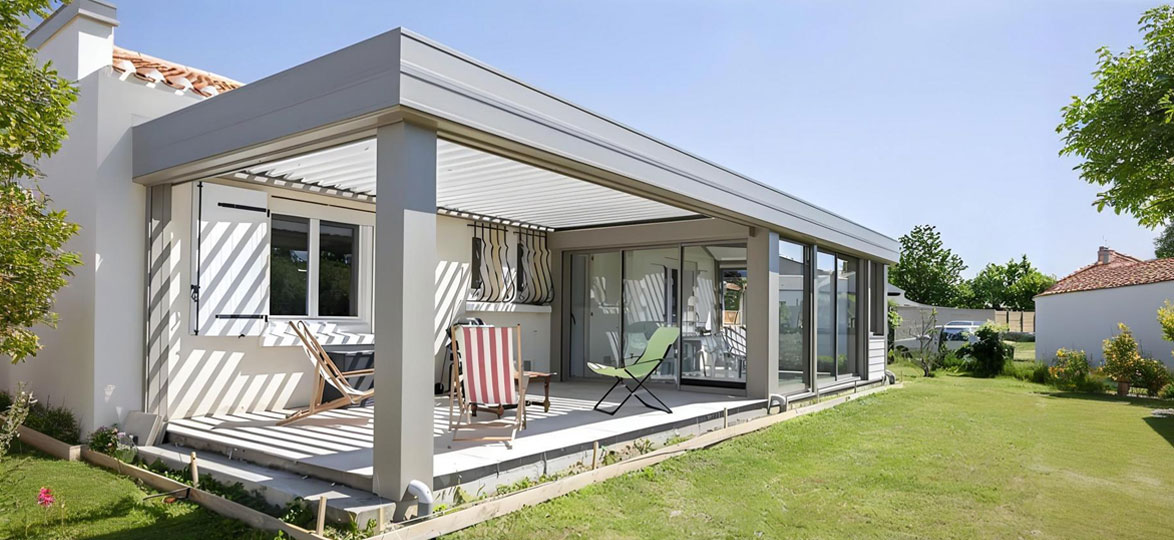
A pergola is an open structure supported by posts, with a roof made of beams or lattices. Unlike veranda, a pergola can be either a freestanding structure or attached to a building, offering greater flexibility. Pergolas are typically found in backyards (though they can also be built at the front of a house). The design is relatively simple, usually consisting of beams and rafters, and mainly provides partial shade. However, due to its open roof design, it cannot fully shield against wind or rain, making it less adaptable to varying climates.
Compared to traditional veranda, the advantage of a pergola lies in its lighter structure, which is much less bulky than a balcony. Modern aluminum pergola kits or vinyl pergola designs offer better sun and rain protection, ensuring 100% shade coverage. The retractable roof pergola design allows users to choose between full shade or enjoying the sun. The flexible design of modern aluminum pergolas can meet various needs, bringing more adaptability and comfort to outdoor spaces.
What is the Difference Between a Veranda and a Pergola?
Although both verandas and pergolas are popular outdoor structures, they differ significantly in design, functionality, and adaptability. First, a veranda is an integral part of the building, typically wrapping around multiple sides of the house, and features railings and a fixed roof that cannot be adjusted. A veranda with glass railings allows sunlight to enter in the winter, providing warmth, but in the summer, it may become too hot. Once the roof is fixed, it cannot be adjusted to meet changing needs, which makes it less adaptable, especially across different seasons.
Advantages and Disadvantages of Verandas:
Advantages:
l Provides additional living space
l Ample natural light
l Seamlessly integrates with the home, enhancing the overall aesthetic
Disadvantages:
l Fixed roof, non-adjustable
l Can become too hot in summer and lacks ventilation in winter
On the other hand, a pergola is a more open structure, usually made of posts and beams. Traditional pergolas are often made of wood or feature an arch design, commonly used to shade walkways or patios in gardens and courtyards. While a pergola provides some shade, its open roof design means it cannot fully block wind or rain, limiting its functionality in various weather conditions. The design of a pergola focuses on creating a relaxed, open space, ideal for leisure, gatherings, or supporting plant growth. Unlike a veranda’s enclosed design, a pergola is aimed at creating a pleasant outdoor atmosphere, not providing full protection from the elements. As design needs have evolved, modern aluminum pergolas combine aesthetic appeal with practicality, improving structural stability while overcoming the protective limitations of traditional pergolas.
Advantages of AMS Aluminum Pergolas:
l Louvered roof design for adjustable shading
l Hidden drainage system ensures 100% waterproofing
l Smart control system allows you to open or close the roof as needed, enhancing flexibility
l Integrated design can transform the pergola into an outdoor room
l Flexible design allows for installation on existing patios or buildings, adapting to various environments
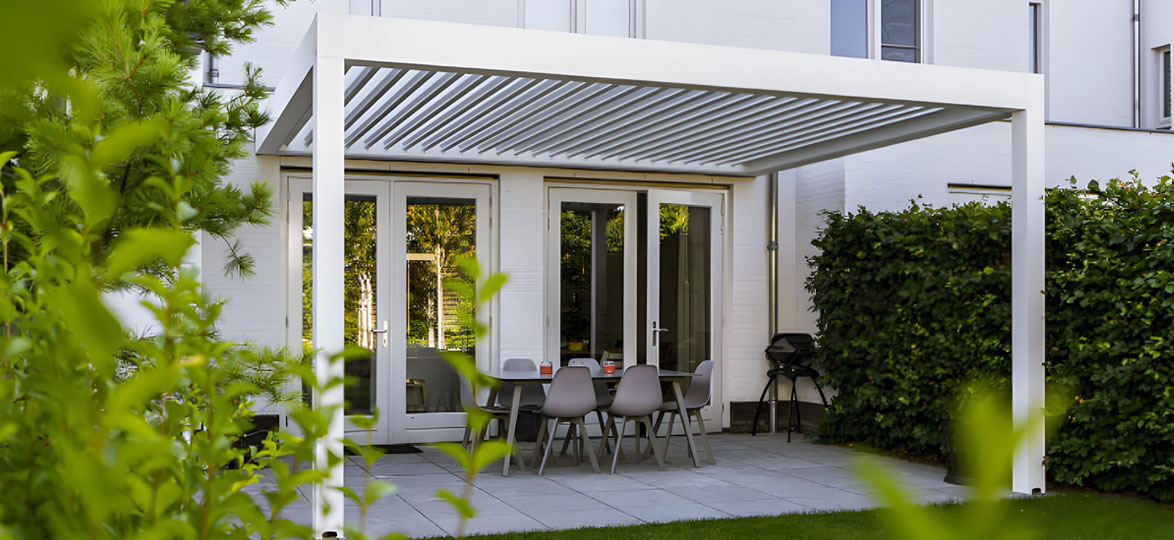
Overall, pergolas excel in flexibility and openness. Their design is more adaptable to individual needs, such as adding climbing plants or installing an adjustable roof system, while verandas typically have fixed structures with limited flexibility
Conclusion: Making the Right Choice for Your Home
When choosing between a veranda and a pergola, the most important factors to consider are your specific needs, personal preferences, and how you plan to use the space.
If you're looking for an enclosed outdoor space suitable for year-round use, a veranda might be the better choice. A veranda has a sturdy roof and an enclosed design, providing excellent protection and making it ideal for use throughout the year. Whether you want to use it for dining, relaxing, or enjoying a cup of coffee, a veranda seamlessly extends your living space outdoors, allowing you to enjoy the fresh air even on rainy or colder days.
In contrast, a pergola is better suited for those who want an open, airy outdoor space that brings them closer to nature. Especially modern louvered pergolas, which combine shade with flexibility, allowing you to adjust the louvers to suit your needs. Whether it's a sunny day and you want full exposure to the sun, or a hot summer afternoon when you crave more shade, a louvered pergola can easily adjust to ensure comfort in various weather conditions. Whether you choose the solid protection of a veranda or the flexible charm of a pergola, both structures can enhance your home's functionality and aesthetic appeal.
For those seeking a perfect balance of functionality and style, AMS offers the ideal solution. Our louvered pergolas come with adjustable roofs and an intelligent control system, allowing you to change the roof's angle according to the weather, creating the perfect outdoor space. Additionally, AMS’s sleek, modern designs strike the perfect balance between practicality and beauty, elevating the overall atmosphere of your home. As a professional pergola manufacturer, we also offer comprehensive service and warranties, ensuring a worry-free experience.
Now, Contact AMS for pergola designs and quotes!!!
